Image creation
Hotel Attraction
The ghost of an alternative New York
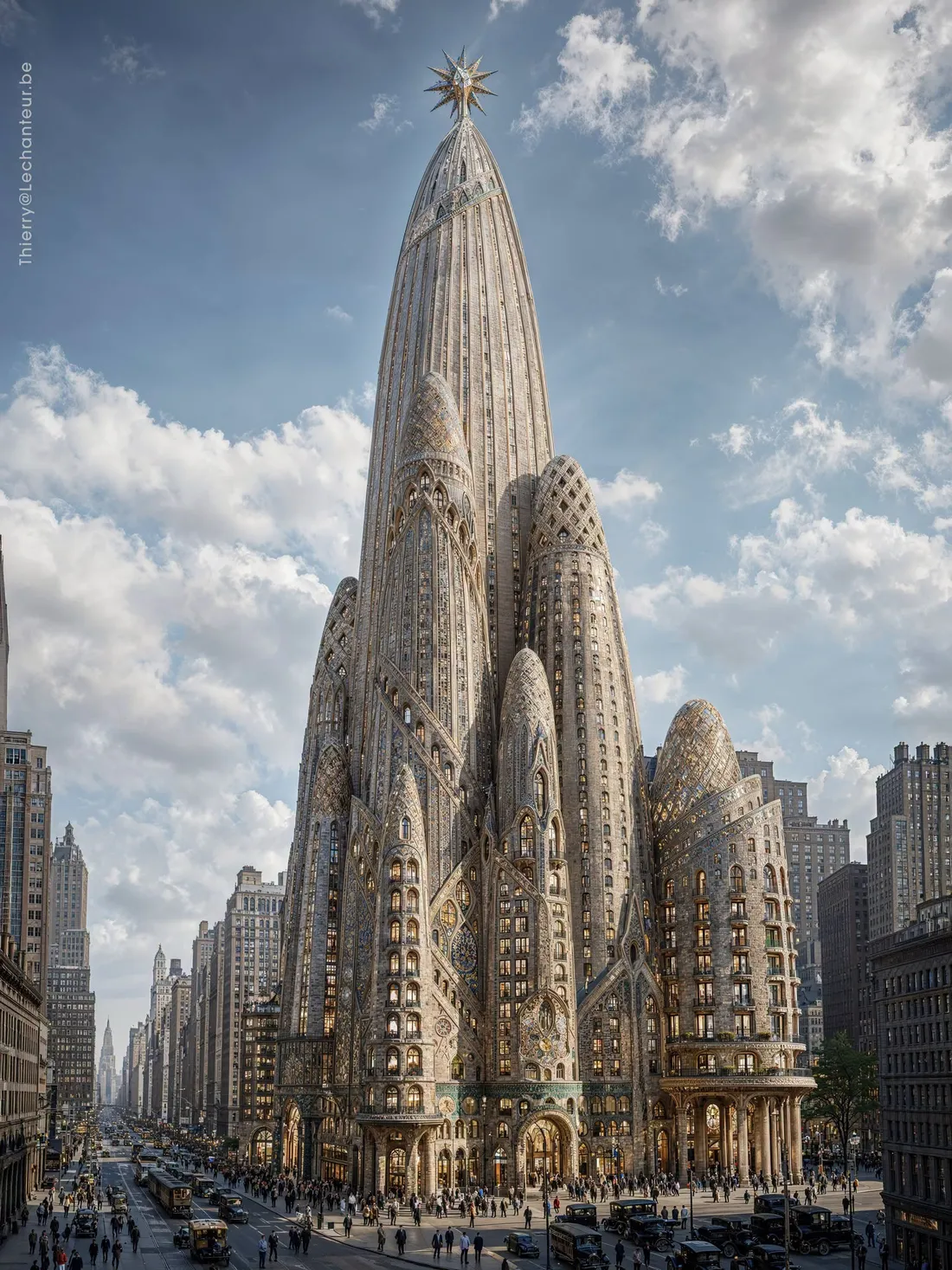
In 1908, Antoni Gaudí imagined a dizzying 360-metre building for New York. Named Hotel Attraction, this monumental project was to bring together a hotel, a theatre, restaurants, galleries and, at its summit, an observation deck overlooking Manhattan.
The building was never constructed. All that remains today are a few drawings, descriptions and accounts published decades after its conception. Yet this architecture seems to belong to a parallel reality: a New York where Gaudí’s curves, colours and organic forms would have found their place among the skyscrapers of glass and steel.
For the centenary of the Catalan architect’s death, I wanted to give this unfinished dream a presence once more.
Extending Gaudí’s dream
My intention was not to precisely reconstruct Gaudí’s drawings, nor to claim to show what the Hotel Attraction would really have been. I chose instead to extend his dream.
From the available documents, historical descriptions and Gaudí’s architectural vocabulary, I imagined a free interpretation of this monumental tower: an architecture that seems to have grown naturally into the New York landscape.
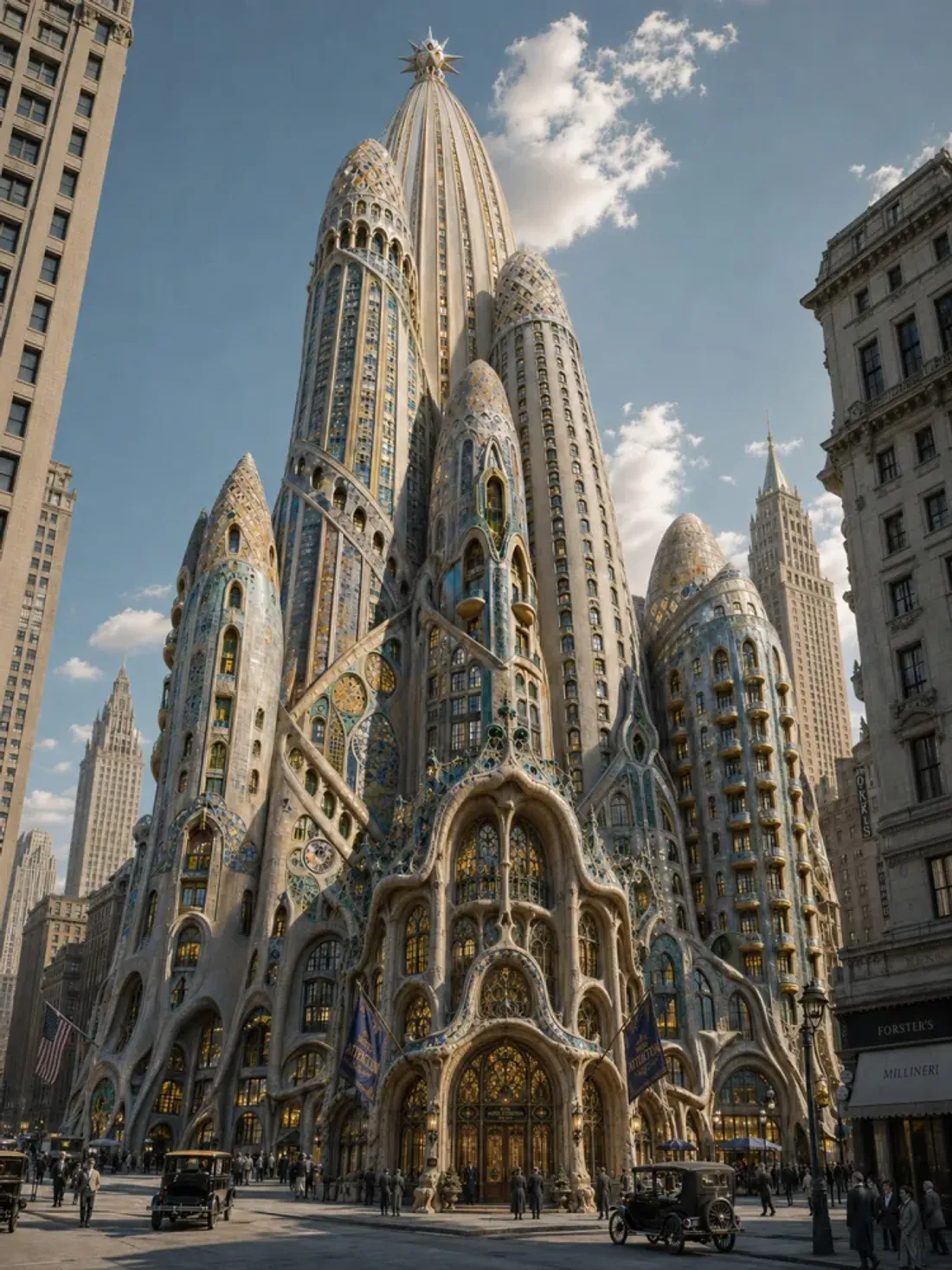
The central tower, crowned with a star, rises among lower volumes. Stone, glass, metal, colour and mosaics compose an almost mineral whole, halfway between a mountain, a cathedral and a living organism.
This is therefore not a strict historical restitution, but a documented visual fiction: the believable evocation of a building the world almost came to know.
Photographing a building that never existed
For more than thirty years I photographed real architecture. This project gave me the chance to photograph, in a way, an architecture that never existed.
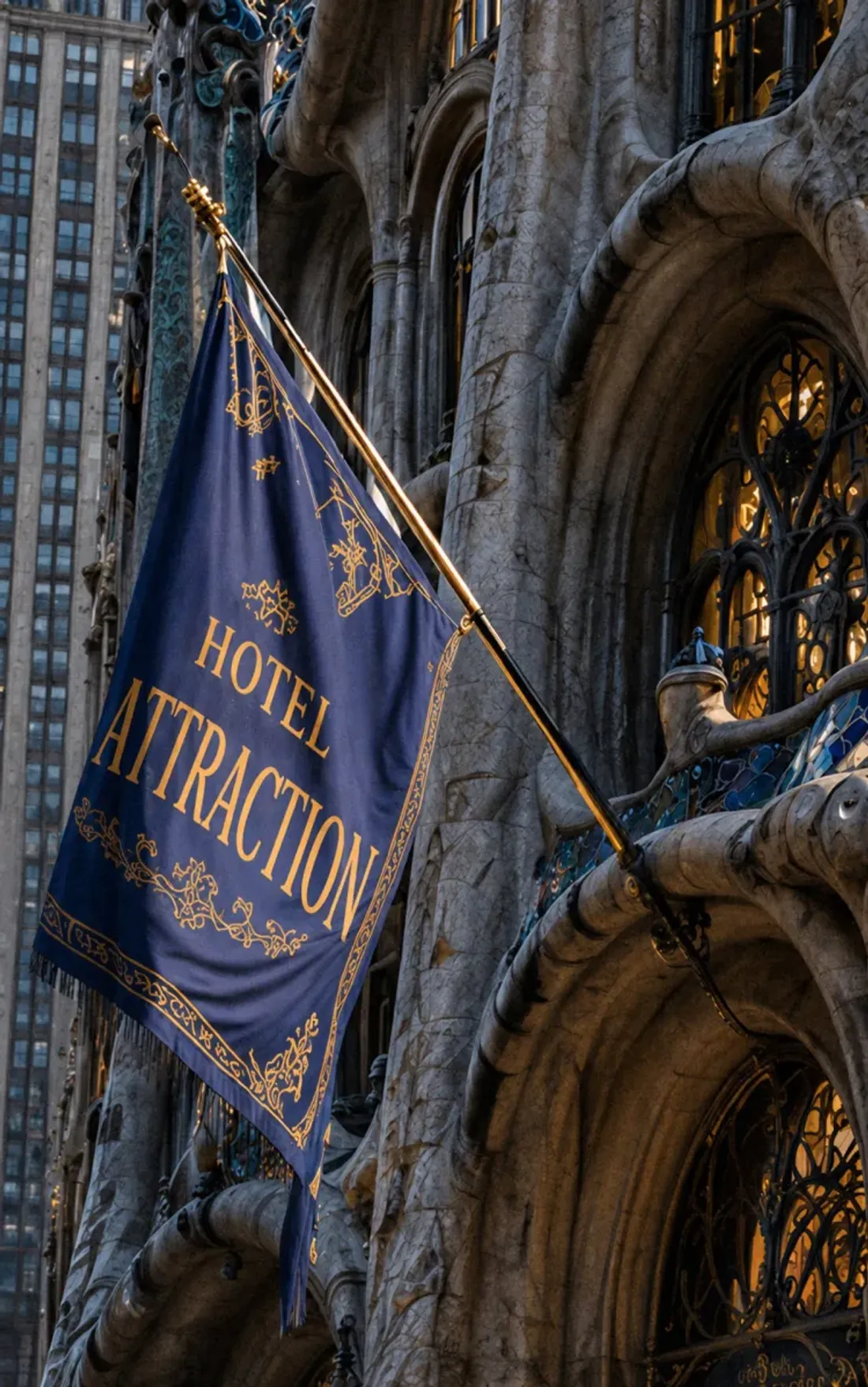
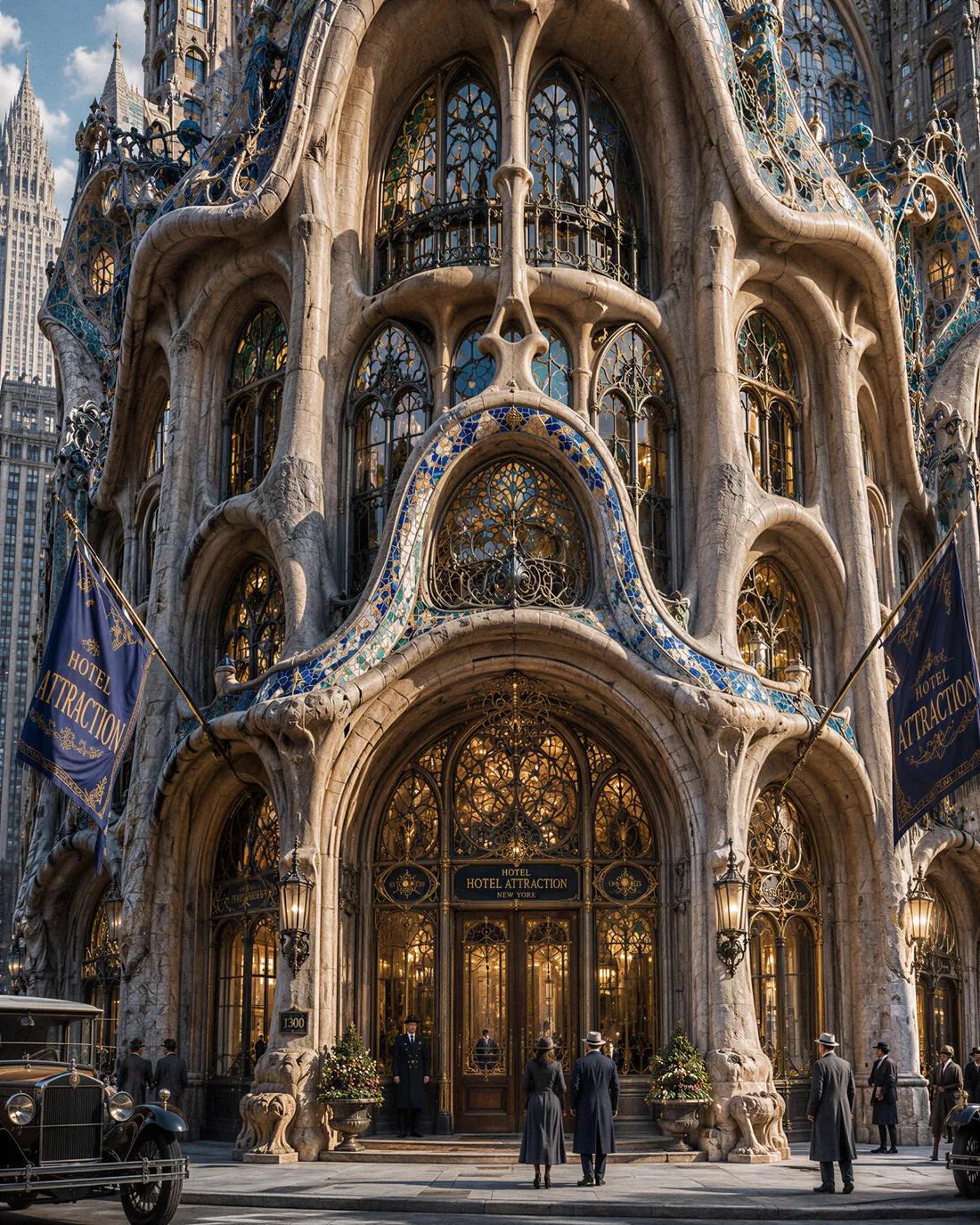
I looked for the viewpoints, the light, the materials and the details as I would have before a genuine monument. Some images place the tower in its urban setting; others move close to its façades, its entrance or its volumes to give it an almost physical scale and presence.
Artificial intelligence acts here as a tool for creation and visual exploration. It replaces neither the research, nor the eye, nor the composition.
The work began by gathering drawings, texts and historical descriptions, rewritten as a personal visual brief. Dozens of images were produced, compared, selected and reworked in Photoshop, then passed through several AI models to harmonise their forms, materials and light. The process is closer to an editing room than to an image obtained in a single generation.
Between memory and alternative history
Hotel Attraction is part of a wider artistic approach devoted to architectures that have vanished, been forgotten or were never built. With the digital reconstruction of Liège’s Saint-Lambert Cathedral, I started from the traces of a monument that had truly existed before being destroyed. With Hotel Attraction, I work on an architecture that never went beyond the project stage.
The two works answer each other. Saint-Lambert Cathedral belongs to the memory of a vanished place; Hotel Attraction, to the impossible memory of a future that never happened. Between them lies the same desire: to make momentarily visible what can no longer be photographed.
The nostalgia of a future that never happened
Some architectures move us precisely because they almost existed. Hotel Attraction is the ghost of an alternative New York: in that other history, the Manhattan skyline might have been transformed by a tower of colour, curves and organic forms.
These images do not seek to correct history. They simply open a window onto what it could have become.
International recognition
The series was featured by the international architecture and design magazine Dezeen on 18 June 2026, as part of its editorial series marking the centenary of Antoni Gaudí’s death. The article describes the project as the “ghost of an alternative New York”.